Frederick Clawson murder
The Dark HalfFrederick Clawson’s murder transforms a blackmail scheme into a crime scene arranged like one of George Stark’s novels. Discovered by Clawson’s landlady, Dodie Eberhart, in Washington, D.C., the killing links a page from a People magazine article about Thad Beaumont and George Stark to a message invoking the sparrows. Its staging makes the boundary between Stark’s fictional violence and the murders being investigated increasingly difficult to hold.
Background and Stakes
Clawson had presented himself to Dodie as a successful figure with money due, persuading her to tolerate four consecutive late rent payments. She was not simply an indifferent landlord: she was devoted to hard-boiled crime fiction and considered George Stark one of its best practitioners. She had followed Stark’s novels from Machine’s Way and Oxford Blues through Riding to Babylon, which appeared to be the last.
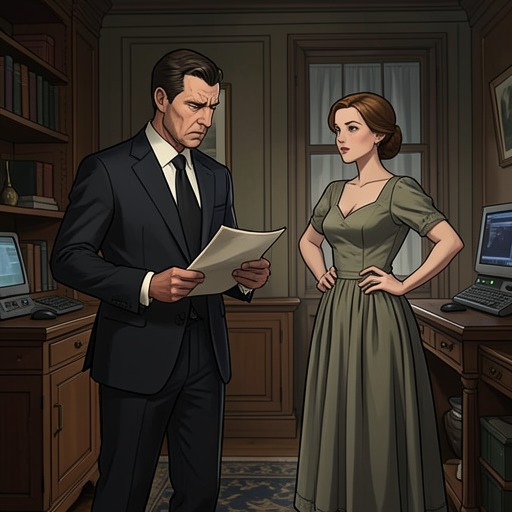
That familiarity gives Dodie a pointed perspective when she enters Clawson’s apartment. She knows the conventions of the books whose author’s identity had become the subject of the People story, and she recognizes how closely the scene resembles an act by Alexis Machine, the central character of the first and last Stark novels. The crime does not merely take place alongside the fiction; its arrangement invites a reader of that fiction to interpret it through Stark’s violent world.
Discovery of the Crime
Dodie notices that something is wrong before seeing the room itself. A disturbed cushion and the sound of a radio unsettle her; common sense urges her to leave, but curiosity leads her to look inside. Her attention fixes on a precise collection of objects: two Amstel beer bottles, one empty and one partly full; an ashtray marked CHICAGOLAND!; two unfiltered cigarette butts, despite Clawson’s not smoking cigarettes; and a small box of push-pins lying on its side, with pins scattered across the glass coffee table.
Some of the pins have fallen onto an open copy of People featuring the story about Thad and George Stark. From where Dodie stands, she can see an upside-down image of the Beaumonts shaking hands across Stark’s gravestone. The page was the story Clawson had believed would never appear in print, and which he had expected would make him moderately wealthy. Its presence at the scene therefore connects the murder both to the article that threatened his expectations and to the public revelation of Stark’s identity.
Dodie finds Clawson tied to a living-room chair, with his clothes in a heap beneath the coffee table. The murder has been staged with extreme violence, and his severed tongue is pinned to the wall. Blood runs down the wallpaper beneath it. Another push-pin, with a bright green head, fixes the second page of the People article to his chest; the page includes a photograph of Liz Beaumont offering Thad a pan of brownies. The details make the article more than incidental evidence: the killer has incorporated its images into the display.
Above the tongue, written in blood, are the words “THE SPARROWS ARE FLYING AGAIN.” The message turns the scene into an explicit sign, joining the birds’ ominous recurrence to Stark’s fictional methods. Dodie’s immediate comparison is to something Alexis Machine might do. The recognition comes from her reading, but the murder itself makes that recognition part of the evidence the story asks its characters and readers to confront.
Aftermath and Investigative Significance
Dodie faints, then regains consciousness less than three minutes later. Unable to stand at first, she crawls to the apartment door and locks it, securing the bolt and police bar before calling for help. She remains inside with the body because she fears the alternative. When officers arrive, she refuses to let them in until one slides identification under the door; only then does she proceed cautiously to the kitchen phone and contact the police.
The discovery is subsequently reported to Thad and Liz by Alan Pangborn, who identifies Clawson as the second murder victim connected to the investigation. Pangborn says that a page from the People article was found in Clawson’s apartment and appeared to have been used as a symbol in a highly ritualized killing. Liz recognizes Clawson’s name, while Thad has no clear understanding of why the crimes are connected. The scene Dodie found thus becomes a bridge between Clawson’s attempted exploitation of Stark’s exposed identity and the wider series of murders bearing Stark’s signature.
The murder also sharpens the novel’s conflict between an ordinary evidentiary investigation and a pattern that resembles genre fiction made real. Thad points out that someone appears to have planted his fingerprints and questions whether the prints meet the standards for admissibility in Maine. His challenge does not explain Clawson’s death, but it exposes the danger of treating a deliberate resemblance as a straightforward solution. The People article, the staged page, and the sparrow message offer an interpretation while leaving the killer’s identity and the mechanism linking the crimes unresolved at the point of discovery.
Investigative Context
The murder enters the investigation as more than a second killing: it tests whether the apparent clues can be reconciled with ordinary police procedure. Alan Pangborn tells Thad Beaumont and Liz Beaumont that Frederick Clawson has been killed in Washington, D.C., and that the People article about Thad and George Stark was found in Clawson’s apartment. One page appears to have been used as a symbol in what Pangborn describes as a highly ritualized murder. Liz’s immediate recognition of Clawson’s name confirms that the dead man was not a stranger to the Beaumonts, while Thad says he does not understand what is happening and Pangborn asks him for help rather than arresting him.
The available physical evidence points back toward Thad in a way that makes the case seem almost deliberately constructed. In the separate investigation of Homer Gamache’s death, fingerprints attributed to the perpetrator were found on Homer’s truck, including an unusually clear print on the rearview mirror, rolled in blood. When the prints were processed through a graphics computer, Thad’s service record came back. Thad counters that fingerprints often appear only as partial or smudged impressions and asks what threshold is required for their admission. Pangborn answers that Maine requires six perfect points of comparison. The print evidence is therefore both a concrete basis for suspicion and a reason to question how the incriminating pattern was produced.
Thad voices the suspicion that Pangborn may have imagined a twin as an explanation for the apparent impossibility of the evidence: one man could have attended the party in Castle Rock while another committed the killings and traveled between locations. His elaborate hypothetical is not an account of what occurred; it exposes the contortions required to make the evidence fit an ordinary explanation. Pangborn says he already knows what a check of the birth records would show, and that Thad seemed truthful. The exchange leaves the prints unexplained while making clear that the sheriff does not regard Thad’s apparent connection to the murders as proof of guilt.
The murder also draws on the criminal fiction that shaped Clawson’s own chosen public identity. Before his death, Dodie Eberhart understood George Stark’s books as hard-boiled crime novels about bank robbers, violence, and men with narrowly fixed aims. Thad, discussing the creation of the Stark pseudonym, describes the character Alexis Machine as resembling a programmed machine, driven by a single purpose. That literary lineage gives the staged killing a recognizable fictional grammar: Dodie sees the scene and thinks of something Machine might do. Yet resemblance is not identification. The novel makes the resemblance vivid while keeping the question of how Stark’s fictional methods have entered the real investigation unresolved.
Clawson’s Death and the Stark Fiction
The evidence surrounding Clawson’s murder gains its force from the gap between what the characters can establish and what the scene seems to mean. Dodie Eberhart knows George Stark’s crime novels intimately: she had followed them from Machine’s Way and Oxford Blues through Riding to Babylon, and regarded Stark as one of the best writers in the hard-boiled tradition she loved. She had also tolerated four late rent payments because Clawson claimed money was coming. Her familiarity with the books makes her more than the first witness; it gives her a literary frame for reading the crime, even as that frame cannot tell her who committed it.
That frame has a specific origin in the way Thad Beaumont created Stark. Thad says the separate identity helped him escape writer’s block, and that the name drew on Donald E. Westlake’s Richard Stark pseudonym and its novels about Parker, a professional thief with little beyond robbery to define him. Thad remembers the division between Westlake’s sunny-day writing and Stark’s rainy-day work, and describes Parker as almost a killer robot whose single aim is to recover his money. He later identifies Alexis Machine as the central character of the first and last Stark novels. Dodie’s thought that Clawson’s murder resembles something Machine would do therefore joins a witness’s knowledge of the novels to the author’s account of the fictional tradition behind them.
The apparent literary pattern is not, however, a solution to the case. Pangborn tells Thad and Liz that Clawson has been killed in Washington, D.C., and that a page from the People article about Thad and Stark was found in the apartment, apparently used as a symbol in a highly ritualized murder. Liz recognizes Clawson’s name, while Thad says he does not understand the situation; Pangborn asks for his help rather than arresting him. The article and the staging make the murder look like a message about Stark’s exposure, but they do not by themselves establish the killer’s identity or explain how the fictional pattern has become part of the real investigation.
The investigative trail surrounding Clawson’s murder reaches beyond his apartment, where the People article and the sparrow message make the killing look like a piece of Stark fiction. In the parallel inquiry into Homer Gamache’s death, police found the perpetrator’s fingerprints on Homer’s truck, including an exceptionally clear print on the rearview mirror, rolled in blood. When the prints were entered into a graphics computer, Thad Beaumont’s service record came back. Thad questioned whether prints could be so conveniently complete, noting that ordinary impressions were often partial or smudged; Alan Pangborn explained that Maine required six perfect points of comparison for a print to be admissible. The evidence connected Thad to the crimes while leaving the circumstances of that match open to suspicion.
Thad tested the limits of an ordinary explanation by imagining an identical twin who could have attended a party in Castle Rock while another version of him committed the murders and traveled between states. He presented this as a deliberately absurd reconstruction, not as an account of actual events. Pangborn said that a birth-record check would tell him what he already suspected, and that Thad had seemed truthful. The exchange did not solve the apparent contradiction between the prints and Thad’s alibi; it established that the sheriff treated the evidence as troubling without taking it as proof of guilt.
The novel also places the murder beside the literary history of George Stark. Thad had chosen the separate identity partly to break his writer’s block, drawing on Donald E. Westlake’s Richard Stark pseudonym and the hard-edged novels about Parker, a professional thief defined by robbery. He recalled Westlake’s division between sunny-day writing under his own name and rainy-day writing as Stark, and likened Parker to a machine programmed around a single aim. Alexis Machine, the central figure of the first and last Stark novels, carries that mechanical criminal logic into the fiction Dodie Eberhart knows so well. Her recognition of Clawson’s staged death as something Machine might do gives the scene a legible genre pattern, but the pattern remains an interpretation, not an answer to who killed Clawson or how Stark’s fictional world has entered the investigation.